
My Croatian Small Ship Cruise: Seven Nights of Dalmatian Discovery
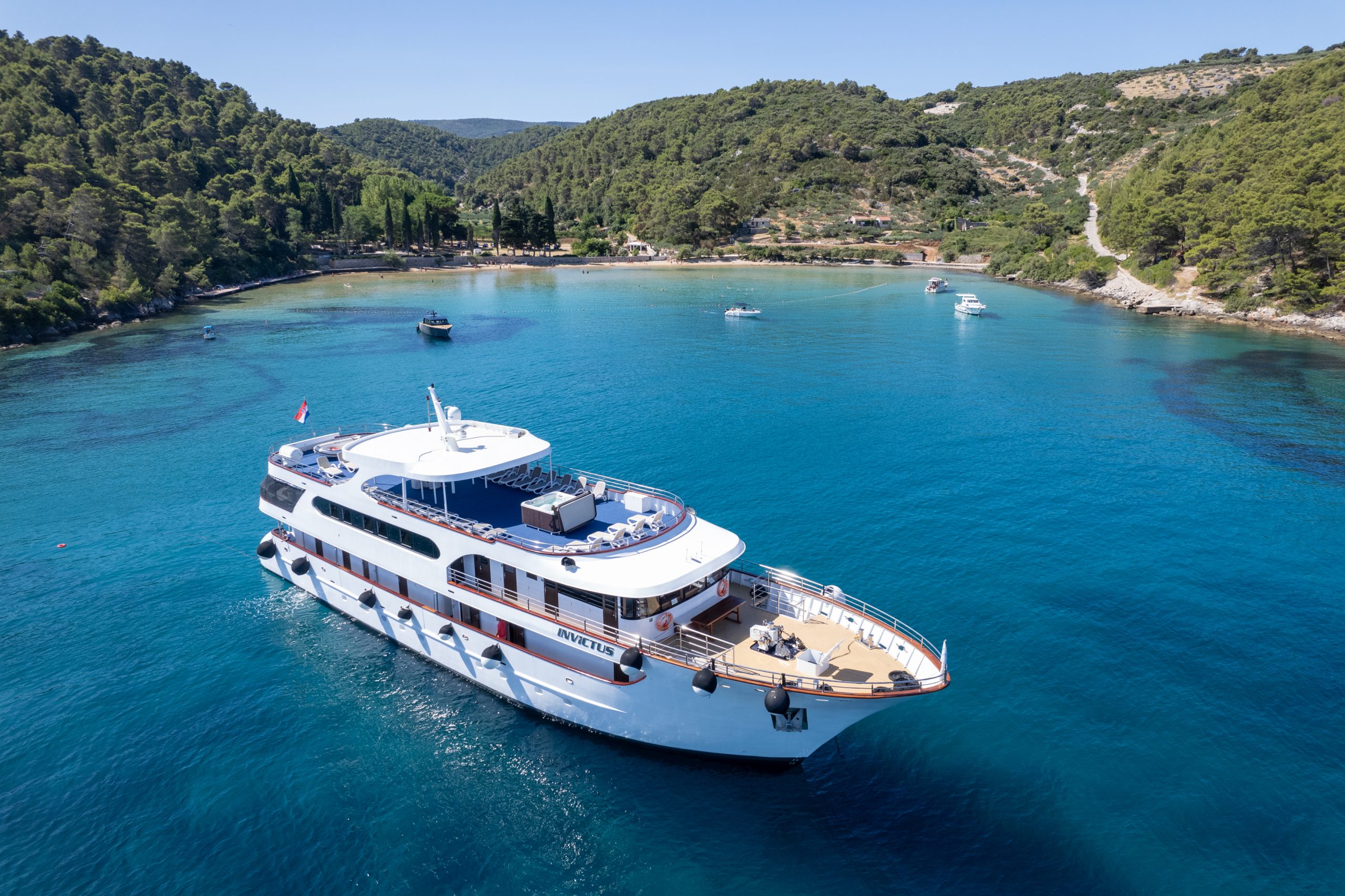
MY CROATIAN CRUISE, THE PERFECT DALMATIAN EXPERIENCE
Narrative and pictures by Melanie French
Seven nights on a small cruise ship with probably 30 or so strangers and without my best friend Sarah. It wasn’t what we had planned but her sister in Australia had suddenly been hospitalised and she needed to be there and fast. I understood of course and the tour company was really understanding. They agreed to let me travel alone at no single supplement and agreed to hold Sarah’s payment as credit for a cruise at a future date. She agreed and left for Sydney next day. I began to worry about the cruise.
Together we had been on city breaks to Croatia before, namely to Zagreb the capital and to Split which we combined with a few days in Rome. We loved them all. We share a real passion for sea swimming (but not in UK as it is too cold) and we wanted to do more of that and also see the Dalmatian coast that everyone seemed to be talking about. Sarah is efficient at research and had obtained all manner of statistics about the many qualities of the Croatian Adriatic and we spent hours looking at videos and photos of the utterly amazing blue sea and hidden bays. But – and there was a big but - neither of us wanted to drive long distances nor sit in buses for hours then change hotels each night and yet we wanted to see a lot of the famous Dalmatian region and islands. And that is how, one evening, over glasses of wine, ‘Dear Google’ presented us with the cruise option. It seemed to fit all the boxes: seven nights from Dubrovnik sailing northwards ending in Trogir. Both UNESCO-listed walled cities, frequent swim stops, free time at a different place each day (for more swimming or sightseeing), ensuite cabin plus most meals during the trip, so, after a little more wine, we booked it there and then. Ten months later, life stepped in and had Sarah going in the direction of Australia rather than the Adriatic.
I arrived at Dubrovnik airport on a glorious sunny afternoon in late September where a smiling driver held a sign with my name on it and I was escorted onwards. The drive was barely 30 minutes and on the road bends, I caught glances of that amazing sapphire blue sea that I remembered so well from our Split trip.
On the dock, two crew members checked my name and one then whisked my luggage on board beckoning me to follow. My cabin on the MV Invictus was just like a four-star hotel room with a surprisingly spacious bathroom with shower. Television, toiletries, towels (including a beach towel) were all there.
I unpacked then wandered up to the outdoor salon deck to enjoy the sunshine over a glass of wine served from the bar. I watched other guests board the ship and I smiled on seeing that there were other solo travellers like me.
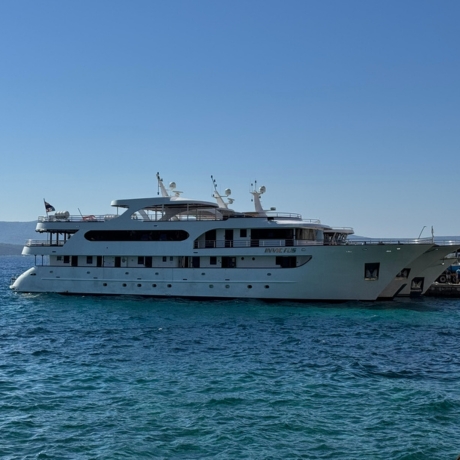
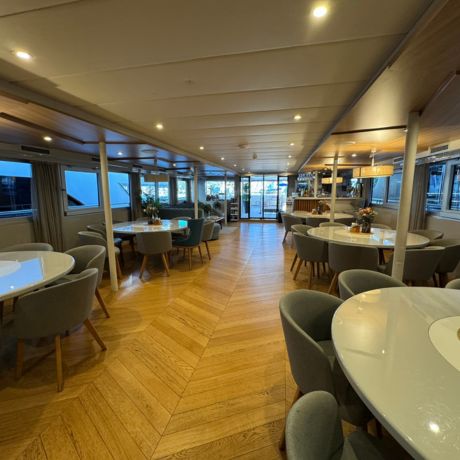
An hour later after an introduction to the crew and a safety briefing from the captain we were all enjoying a three course dinner and I secretly hoped that the delicious seafood risotto would appear on the menu again during the cruise! Sadly it didn’t but I found an excellent one on the island of Vis. There was a pleasant buzz of people swapping names and getting to know each other. The cruise had billed itself as “casual, stylish” and it was. I had only once cruised before, a few years before with another friend on amassive liner from Barcelona carrying around 4,000 people and I had found it all a touch formal, overwhelming too. This felt different, and I sensed the following days might feel something like a house-party afloat.
Dubrovnik
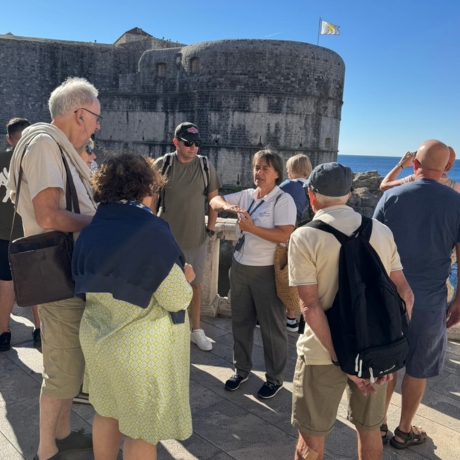
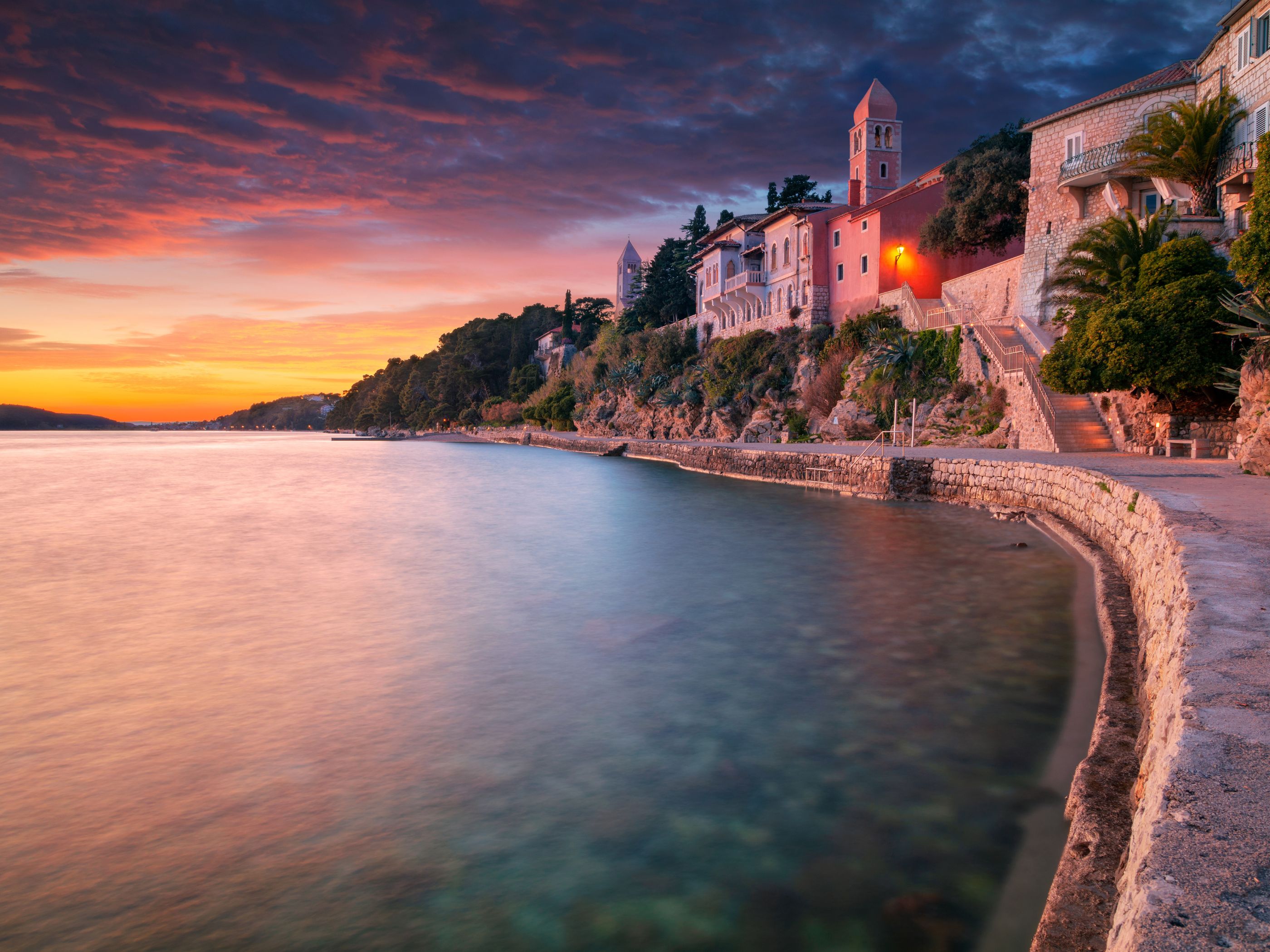
Next morning, there was organised guided sightseeing of Dubrovnik’s walled old town. I had to pinch myself at the sheer beauty of this stone wonder. I sent photos to Sarah telling her that we must return there sometime since this had been just a snapshot.
Breakfast was great with hot dishes, fruit, cheeses, ham and fresh breads. I usually rather rushed mine and took my coffee up onto the sun deck, not to use the sunbeds but to stand and watch everything passing by. There is an old saying about fashion: “blue and green, never to be seen unless there’s something in between” and here there was. Below the bright blue sky was the endless green of pine trees and then a deeper blue sea. The “in between” was a layer of pale rock which glistened like ivory. Breathtakingly beautiful. A lighthouse on an island here, hillside vineyards sweeping down to the sea there, it was beyond picture postcard perfect. I knew that Croatia had more than 1200 islands, and, on my very first day aboard I had five small ones directly on my horizon.
Mljet
We arrived at the island of Mljet, (pronounced “mill-yet”) where a few sleeping cats were curled up on a fishing net on the dock. Part of the island is one of Croatia’s eight national parks, something I learned from Jennifer, a Croatia expert and part of the crew, who gave us some really interesting daily talks. Legend has it that Ulysess was stranded on a rock (or kidnapped by the nymph Calypso) where they lived for seven years. A walk through the woods led to one of the inland lakes where the water sparkled so brightly it almost hurt the eyes and a small boat took us to St Mary’s island. There we explored the Benedictine monastery and had ice cream at the waterside café. On the walk back to our ship, I reflected about the myth and wondered if Ulysses ever seriously tried to escape. Probably not.
Yet again, our two chefs worked miracles in a small galley kitchen and I remember that lunch; octopus salad followed by sea bass then the fluffiest chocolate mousse with strawberries.
Korcula – Peljesac peninsula
Croatia’s islands often have the main town of the same name (I was learning every day) and Korcula, our next stop was no exception. We were heading for Korcula Town sailing with the massive Peljesac peninsula on our right and tiny, uninhabited islands on our left. Peljesac is famous for robust red wine, olive oil and salt. The salt pans at Ston are still working today and in the 14th century times they vastly contributed to the wealth of the then Republic of Dubrovnik. Some cruises apparently offer an excursion there.
I usually don’t bother with guided tours, as I enjoy wandering around new places. However, our cruise included local guides and I was delighted that we had one for Korcula Town and Zeljka met us from the ship. She was born on the island and was
clearly very proud. Croatia certainly does wow factors and here was another. Korcula Town was simply perfect. Small, brimming with history, polished stone as far as the eye could see and I counted five churches within 500 metres in the centre. In just over an hour Zeljka told us about the herringbone pattern of streets, the fortresses, the Venetian period and Marko Polo the explorer who, locals insist was born on Korcula. She also explained about Moreska, a sword-dance between good and bad knights that came to the island in the late 16th century. We were lucky as there was a performance that night. I booked a ticket, attended and was knocked out by the spectacle of “knights”, men in lavish red and black costumes dancing-fighting on a stone tower, their swords glinting under the night sky.
The sun deck of our ship was the top deck with sunbeds and a jacuzzi. This was where many people chose to sunbathe, read or just breathe in the gorgeous sea air as we continued our journey northwards. I preferred the rear open deck near the salon so I could take in all the sights (impossible when prone on a sunbed). The Adriatic house party so to speak was in full swing with people chatting, getting to know each other and even crew members telling us stories of their hometowns and a life on the sea. It was all wonderful.

Vis
The history of Croatia is complex and our next island, Vis was a part of that very history since it was a military base and closed off to foreigners from after World War 2 until 1989. One of the advantageous of this is that it is almost untouched by tourism and remains beautifully unspoilt. It is the farthest inhabited island from the mainland and probably one of the reasons for its role in World War 2 when crippled aircraft would land at the small airport. More recently, Vis became a movie star when much of the 2018 film “Mamma Mia Here We Go Again” was filmed there with stars including Pierce Brosnan and Meryl Steep on location for months. After we docked, I found a gorgeous little pebble beach near the ruins of the Roman Thermae with the Vis Town waterfront as my backdrop. Sarah and I are both history buffs and I made a note of the military tours available taking in old bunkers, tunnels and submarine storage ports. Perhaps we could do that when we come for our future Dubrovnik trip.
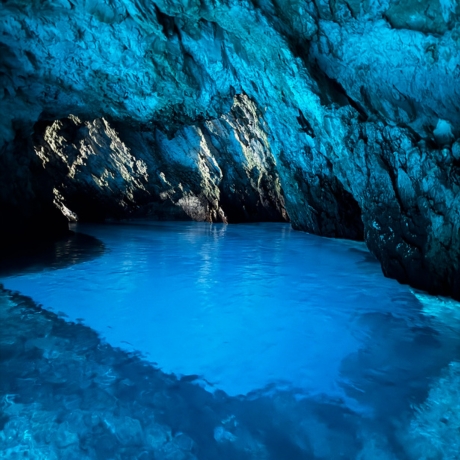
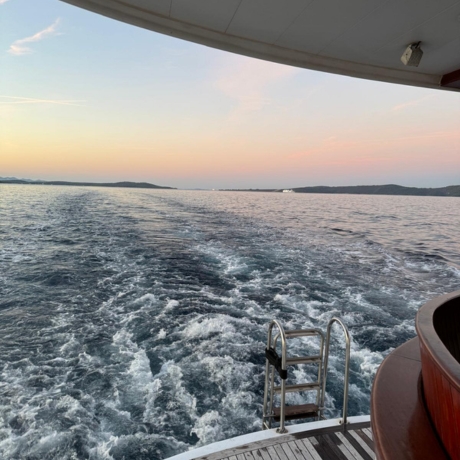
The swim stops were fabulous and we had one or two every day. The Captain always found a hidden cove and the ship would stop there. Little ladders from the swim deck made for easy access into that blue blue sea. There were fresh water showers and flotation equipment for the non-swimmers and we enjoyed a lovely social atmosphere in the sea, chatting with each other and discussing the cruise when we weren’t actually swimming. Glorious, these really were a highlight.
Hvar
Our next stop after Vis was the most famous place in Croatia, alongside Dubrovnik. This was Hvar Town on the island of Hvar. We had learned that while most of the island had remained pristine and natural with lavender heaths and tiny villages, over the last 20 years, Hvar Town had become a party town with late night clubs and so on. I was dreading it until I read that in recent years this had been controlled by restricting noise and opening hours. Davor our barman came from the ancient capital, Stari Grad on the
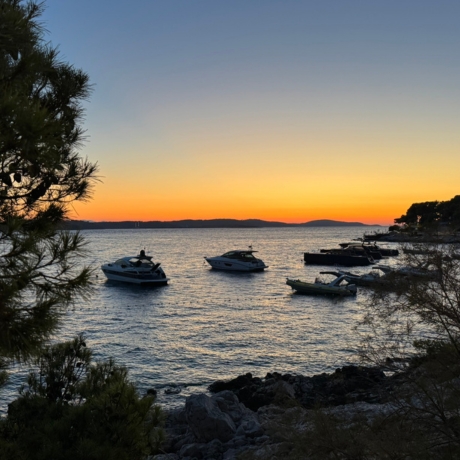
opposite coast to Hvar Town and assured me that the clubbers had had their day in Hvar Town and were only ever there now for six weeks in July and August. I was grateful that it was late September and we had truly wonderful weather every single day. The sea temperature was a perfect 23-24C depending on where we swam.
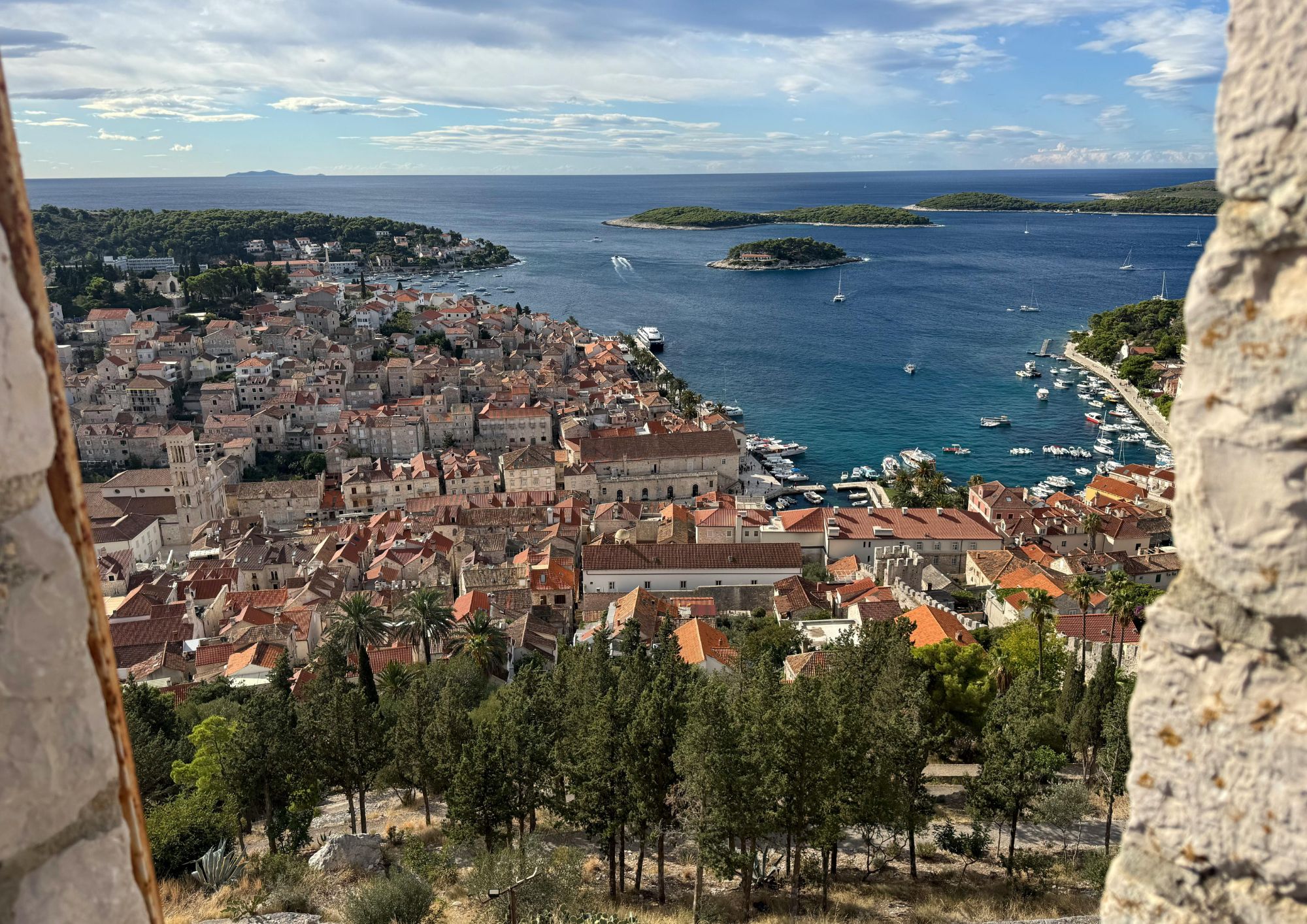
On arrival in Hvar Town, again a local guide met us and showed us the key sights. There was something rather grand about the place, with the huge piazza and Saint Stephen’s cathedral. Plenty of stylish boutiques lined the waterfront, yet our guide cleverly walked us through the oldest streets of town explaining about noble families and their traditions. The oldest public theatre dating from 1612 is here and continually in use being a key venue for the summer festival.
Back on board we all talked about who had bought local lavender products and, believe it or not, every single one of us had! Perfect little gifts and a symbol of the island.
Brac - Bol
When we left Hvar we were heading for the island of Brac, (pronounced “Bratch”) a place Sarah and I had hoped to visit when we had been in Split since it is just a 50 minute ferry ride away, but, alas, we never found time.
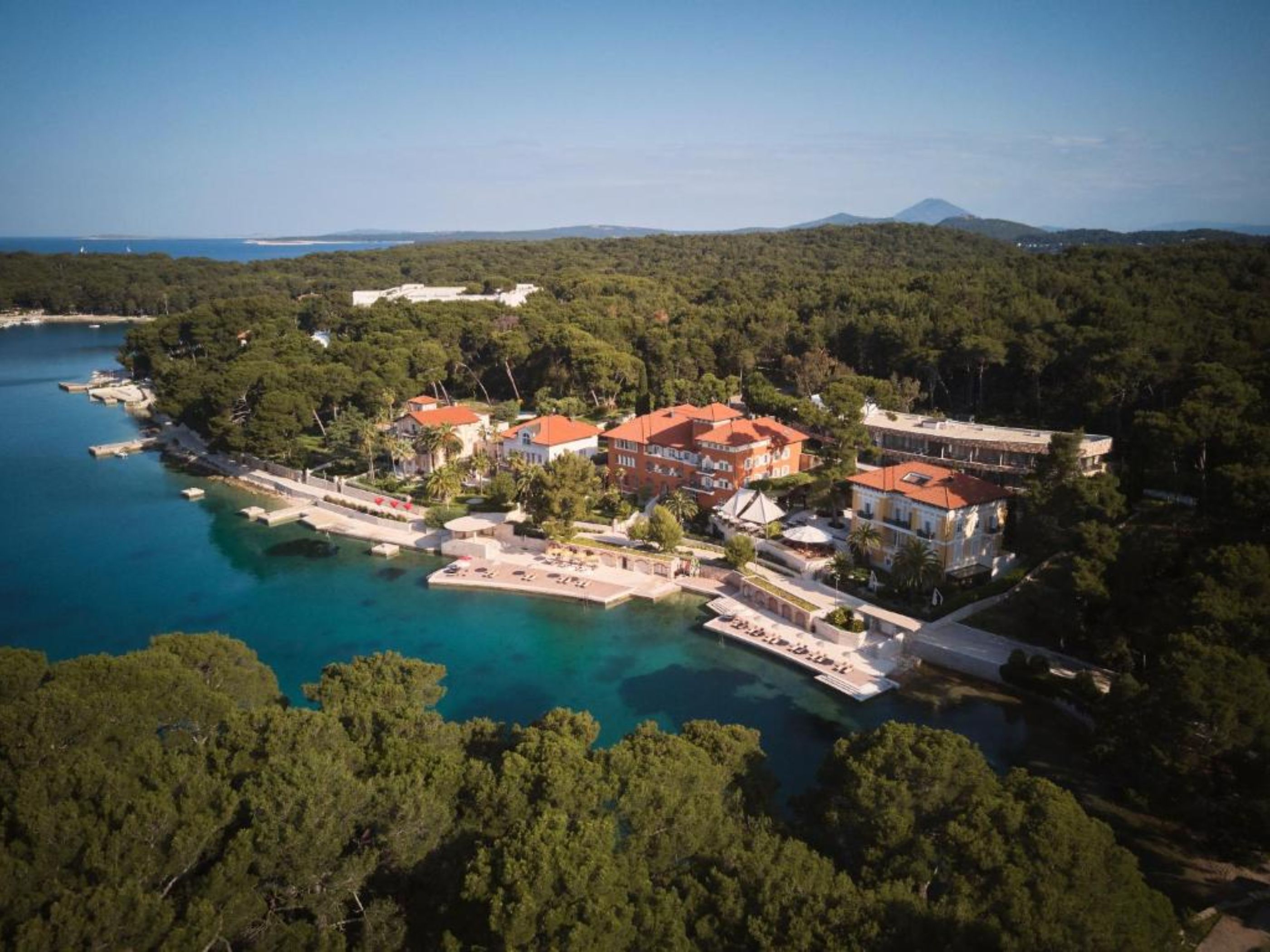
As I was watching the Dalmatian coast pass by, marvelling at the pristine nature and the crystal clear sea, it occurred to me how very clever this little country had been by prohibiting the building of massive tourist resorts and ugly high-rise hotels on their coast. We could see old stone houses and some modern villas, alongside smaller hotels yet all were carefully secluded among the endless pine trees.
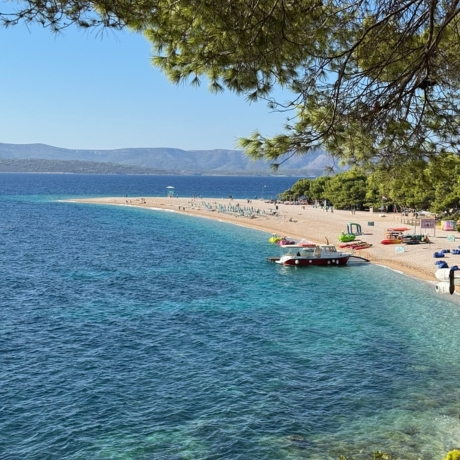
“Just look at this” called Mandy, a lady with whom I had struck up a friendship. We were approaching Bol on the south side of Brac. “This is the place” she continued. And she was right. Bol was a little jewel. Authentic, not flashy and it looked and felt real. We had a few hours free time there. Some visited the local winery for a tasting, others explored the famous V shaped Zlatni Rat beach, others found the little, back street artisan shops selling products of local Brac white stone which is still quarried on the island. And then there were the waterfront lounge bars, looking out through palm trees to monuments of fishermen and the distant islands where we enjoyed a cold beer or coffee. It really was like a film set and was so tranquil in September. Many of us said we would definitely come back to Bol.
Brac – Milna
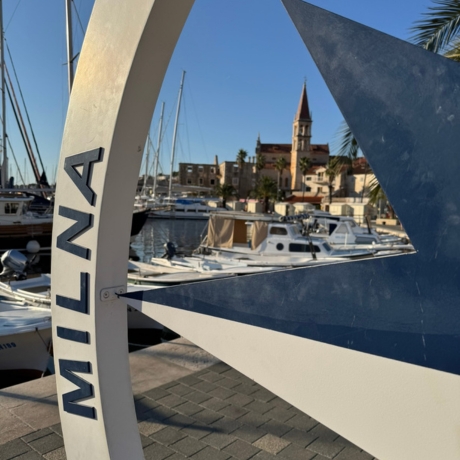
Our sail continued around the west coast of the island until we docked later at Milna, an even smaller, place than Bol with an impressive marina. Swim time for some from the little beach, and for others, a search for decorations for our Captains Dinner in the evening. One clever person made little tiaras for all the ladies from aluminium cooking foil she had bought at a local supermarket (all well stocked wherever we were).
The evening was a delight with a very special menu (think perfectly cooked steaks for 30 people!) and local musicians serenading us on board.
Later that evening, over drinks on deck, we all agreed that this cruise was perfect, it had fulfilled all our hopes and yet, the week had passed so fast and we were nearly at the
end. A terrible thought. Consensus so far about our favourite place had Bol on Brac as the winner.
Split
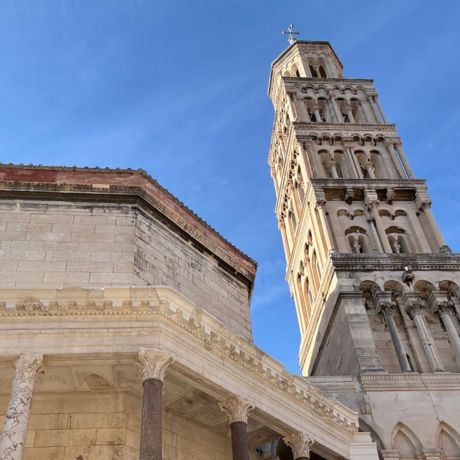
Next day, we docked on the seafront in the very centre of Split, Croatia’s second city and famous for the vast Diocletian’s Palace which formed the core of the historic centre and built between 295-305 AD. Roman emperor Diocletian was born in Salona inland of Split and vowed to build himself a retirement villa on the sea and he did. Our guide Jasna was superb. The walking tour took just over one hour and we saw so much: the former noble palaces, the treasures from Diocletian’s travels including sphinxes from Egypt, the Peristil where he would allow people an audience, churches, the tiny old Jewish area and synagogue with the narrow stone streets leading out to yet another beautiful square.
I realised that, without a guide, I had missed so much on my previous visit here with Sarah.
Trogir
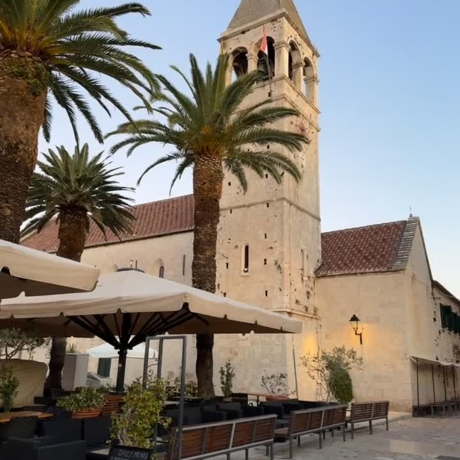
Our final stop was near as we continued to Trogir and I remembered someone mentioning that this was another UNESCO heritage listed town. We docked along a beautiful wide promenade full of palm trees which reminded me a little of parts of the French Riviera. At one end was the awesome round Kamerlengo Fortress where we could see people walking on the top and amazingly this tower overlooked the local football pitch, right by the sea. A walled town with two entrances through exquisite stone arches, tiny alleyways, seemingly full of jewellery shops and secret gardens which led to yet another huge square. Our guide Valentina told us the story of Kairos the Greek God of The Fleeting Moment who is a symbol of Trogir with his story told in the museum within the historic Benedictine monastery.
The museum explained how the fleeting moment of joy is worth holding onto.
In just eight days, we had experienced hundreds of fleeting moments on our unforgettable Dalmatian cruise. Every one of them indeed full of joy.
I thought about Sarah in Australia who was now on her way back to the UK. I couldn’t wait to tell her all about it.
Melanie French travelled on MV Invictus, exclusively chartered by Completely Croatia, you can find out more about our crusies here
Travel with Confidence
Turn Ideas into Your Holiday
journey around your travel dreams.